
Concordat Watch - Concordats by country -
Germany
Just one of the “Fascist concordats” is still substantially in place. Italy has got rid of the Mussolini concordat, Spain has replaced the Franco concordat, Austria has eroded through amendments the Dollfuss concordat and Portugal has scrapped the concordat made with Salazar. Only Germany still retains its Vatican concordat with Hitler.
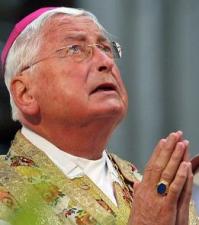
Benedict XVI's first appointment was Walter Mixa as Bishop of Augsburg but in 2010 he was forced to resign after he came under investigation for beating children in an orphanage and embezzling funds from it. Yet, as a Bishop Emeritus, his pension will now be paid by the public, (just like his monthly wage of €7900), thanks to Art. 10.1.i of the 1924 Bavarian Concordat.
The German postwar constitution was carefully designed by the Allies to decentralise the country and hence it handed over many formerly federal powers to the individual states. Thus the federal government has lost the constitutional power to revise the concordat. Instead, it is left up to the states to renegotiate directly with the Vatican in areas like education which under their control. This allows the Vatican to push for the maximal concessions obtainable in each region of the country. The Vatican now has a web of more than 50 concordats throughout Germany concerning individual states and even individual institutions. These are further cemented by numerous statutes, regulations, ordinances and other agreements.
Weimar Constitution let German churches become states within the state
However, the enormous power of both Catholic and Protestant churches in Germany today is not due solely to the concordats or church-state agreements. The privileges that these pacts give to the churches are amplified by another fateful German innovation. It was the 1919 Constitution of the democratic Weimar Republic which gave the churches wide latitude in substituting their own regulations for the law of the land.
These articles were incorporated into the present German constitution, including Article 140 (which in the Appendix takes over Article 137 § 5 of the Weimar Constitution) confirming the status of the Catholic and Lutheran Churches as corporations under public law. At the same time Article 19 § 5 extends to these artificial persons, the rights of real ones, thus setting the stage for a conflict between individual and group rights. On the second page of the menu below several articles show how this church autonomy has let faith-based social services remove millions of Germans from the protection of many civil laws.
Finally, in a landmark 2018 decision, the European Court of Justice moved to restrict the power of German churches to require that all their employees be members. It ruled that they could no longer be the sole judges of whether or not their "ethos" was threatened by employing a non-member. If they could do that, the court said, the EU anti-discrimination directives "would be deprived of effect". (In other words, the German churches can no longer mark their own exams.) Henceforth their employment decisions must be "proportional" -- they must balance their own right to religious freedom with the right of their employees not to suffer religious discrimination.
In theory this means that if church employers want to avoid being sued, they can no longer make church memebership a formal requirement for positions that have nothing to do with religion, for example, administrative, cooking or cleaning jobs. In practice, however, not much seems to have changed. There is nothing to stop the churches from quietly giving preference to co-religionists. This fear of being discriminated against in the job market keeps many unwilling Germans in the church -- and forces them to pay church tax.
Useful sites in German:
State subsidies for religious bodies, Religious discrimination in the workplace,
Summary of a 2012 study on religious job discrimination, Dr Uppendahl on church employment law
- Hitler's concordat (1933) : Text and background
♦ About the Reichskonkordat with Hitler
♦ “The Concordat was a classical political kickback scheme”
♦ Hitler’s 1933 election posters for Catholics
♦ Von Papen, papal chamberlain and Nazi concordat negotiator
♦ Reichskonkordat (1933): Text with Secret Supplement
- The Vatican and the Holocaust
♦ Pius XII, concordat negotiator and Holocaust pope
♦ Just another neutral state: The Vatican in the Holocaust
♦ Sainthood doublecross?
♦ The Vatican and the Holocaust: A Preliminary Report by the International Catholic-Jewish Historical Commission (2000)

- The Nazis and the German churches
♦ The German churches before and after 1945
♦ German churches used slave labour
♦ The “Jew’s sow” (Judensau) on mediaeval German churches
♦ Vatican anti-Judaism and Nazi anti-Semitism
♦ Nazi “Mother's cross” and Maria cult

- Some current German Concordats and what they do
As well as the national concordat made with the Nazi regime, every German state has at least one pact with either with the Vatican or local Catholic bishops. Over 50 German concordats currently in force. Highlights are given from one of the 18 concordats with state governments (Länder), the Brandenburg concordat. Also a list of state concordats is linked to the texts in German.

- Overview of Concordats in Germany
In this excerpt Prof. Francis Messner looks at Germany, where relations between church and state are regulated by treaties. This means international “concordats” for the Catholic Church, and national “accords” for the other religious groups. In the last hundred years there have been three waves of these.
- Controlling professors through the Bavarian Concordat (1924)
Under the Bavarian concordat the bishop can veto all professors of Catholic theology (Art. 5 on the Catholic University) and 21 professors of philosophy, pedagogy, sociology and politics (Art. 3 on concordat chairs). These chairs are 85-90% funded by the state, yet non-Catholics need not apply, nor even a top Catholic scholar who criticised Pope Benedict.

- Does “church tax” help drive concern over the remarried and gays?
Due to “church tax” Germany is the cash cow of the Vatican and to encourage this special rules seem to apply. A quarter of new German marriages are remarriages. Neither these couples nor gays are shut out from sacraments and thus discouraged from paying their church membership fees. And soon they may not even be fired from Church employment.
- An inside look at faith-based social services in Germany
From birth to death many Germans depend on social services that are paid for by the taxpayer, but run by the church. These church institutions, both Catholic and Protestant, operate in accordance with their own religious laws and they affect both employees and clients. These stories about ordinary Germans show what it means to live in the shadow of religious laws. To keep their jobs many must endure interference in their private lives.

- Under God’s roof (2008)
German church employees are outside the labour laws and are forbidden to strike. How do the churches justify denying employment rights? Through a theology of employment called the "third way": in church-run institutions there is so much brotherly love that any conflict of interest between employer and employee is impossible. Strikes are unnecessary and would only disturb the harmony....
- The German principle of “church autonomy”
German law opts for “church autonomy”, rather than “separation of church and state”. According to the Constitutional Court this lets the churches run huge enterprises (at public expense) where state employment laws do not apply, and the churches are free to make their own. This can mean that these employees can legally be fired if their personal lives don't conform to church rules.

- German taxpayers subsidise over 90% of faith-based social services
Dr. Carsten Frerk, an authority on church finances, reveals for the first time in English that social service employees of German religious organisations number 2.5 million and that the German churches pay for less than 10% of their “good works”, with the taxpayer left to foot the rest of the bill.
♦ Church-run home for the aged goes to court for an inheritance
♦ How Caritas and the Diakonisches Werk began
- The church charity myth
The churches only subsidise a third of what the public believes is their own charity. This is undemocratic and dishonest, says Dr. Carsten Frerk. In addition, his research reveals the questionable legality of the huge “state benefits” which are paid by all the taxpayers, not for any good works, but simply for clerics’ salaries, foreign missions and the like. A political storm is now brewing.
- Millions for the bishops: Why the German state pays the wages for the church (2010)
How did Germany become the cash cow of the Vatican? An English transcript of the lively Spiegel video from 7 June 2010 reveals this unknown story. A few weeks after it came out, German politicians broke a taboo and began to publicly question their 200-year-old tradition of taxing everyone for the salaries of clerics at a cost of about €480 milllion in 2014. (This is in addition to, and roughly equal to the “church tax” for members.)

- How far can German churches discriminate against over a million employees? (2014)
In 2014 the German Supreme Court confirmed the right of the Catholic Church to police the private lives of more than a million workers in Church-run institutions subsidised by the state. The German churches got themselves exempted from the 2006 antidiscrimination law and now shelter under a constitutional provision meant to allow the churches to regulate their internal affairs.
- Europe tells German churches to respect employees’ private lives
In September 2010 the European Court of Human Rights handed down a landmark judgment telling German courts to no longer uncritically accept almost any assertion by the churches that an employees’s private life would damage their credibility. They must take into account many factors other than the church’s “right to self-determination”. Schüth v. Germany (ECHR no. 1620/03)
- Money for silence
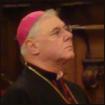
Former Bishop of Regensburg, Gerhard Ludwig Müller, didn’t tell the police about a priest in his diocese who abused children, but sued the journalist, Stefan Aigner, for calling the secret payments to victims “hush money”. The Bishop got a court to order the deletion of a summary of his actions from a Spiegel article. Here is a translation of a full account of this case which escaped the ban.


