
Concordat Watch - Concordat Watch -
Women and religious law
"It is tempting to see in the pope’s varied messages [...] the ploys of a seasoned
political fighter who knows that a move left on the climate and the
economy gives him the space he needs to jab right on social issues." [1]
The Catholic Church uses three means to force women to bear more children than they want: it lies to them about reproductive facts, it places legal restrictions on their access to contraception and it tells them that God wants them to keep producing babies, even if it kills them.
1. Deception and outright lies are spread by pregnancy crisis centres, by online misinformation and even by a fertility app which is funded by anti-abortion campaigners. Contraception (rather than unwanted pregnancies!) is falsely claimed to be damaging to women's physical and emotional health.
2. Legal compulsion is applied by passing laws restricting access to contraception and abortion, by anchoring these restrictions in concordats which cannot be changed by a country's lawmakers (as in the Slovak "conscience concordat"), and even by locking anti-choice Vatican doctrine into a country's constitution (as in the Dominican Republic).
3. Theological pressure is exerted by far-sighted moves to keep women out of the priesthood [2], by papal admonitions to be "fruitful" [3] (see The hallelujah weekend of Ireland), by making religious alliances to try to end family planning worldwide, and even by a saint specially manufactured to show women that it's noble to die while producing children for the Church."Reproductive coercion" by a domineering partner is defined as "a form of abuse in which a woman is pressured to become pregnant against her wishes." Yet it's only called "abuse" when it's done to a woman by a dominating partner. When the perpetrator is a church, reproductive coercion gets called "theology".
The message can also be carefully tailored to the audience. Pope Francis has told African slum dwellers that policies aimed at giving women reproductive choice are just “new forms of colonialism” [4] Yes, he tried to convince these poor women that forced childbearing was some sort of "freedom".
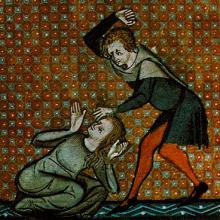
“Complementarity” — he beats, she gets beaten. The Vatican rejects “equality”.
Most Catholics worldwide disagree with church teachings on divorce, abortion and contraception. [6] But Pope Francis cannot yield to this. He is constrained, not only by Catholic theology, but also by the conservatism of areas like Africa, which has the fastest-growing Catholic Church in the world. [7]
While preserving Vatican doctrine, the Pope is trying to retain liberal Catholics. He does this through the widely recommended conversion techniques of finding common ground with doubters and showing that he cares. [8] His remarks are then swiftly followed by Vatican "clarifications" which reassure the orthodox that nothing will change. The Pope himself has described his strategy to a group of bishops — first talk about "God's love", and only later present "new obligations". [9] Fulfilling those "obligations", of course, means obeying the Vatican's rules. But in public Pope Francis has consistently downplayed these, saying,
We cannot insist only on issues related to abortion, gay marriage and the use of contraceptive methods. [...] The teaching of the church, for that matter, is clear and I am a son of the church, but it is not necessary to talk about these issues all the time. [10]
This strategy gives the Church a friendlier face, but doesn't change its cruel and unchanging doctrines.
Beware of substituting "dignity" for "rights"
In 2013 a United Nations human rights expert described "restrictions on access to abortion and about absolute bans on abortion as violating the prohibition of torture and ill-treatment". [11]
Only human rights offer protection from this. While the Vatican offers women a second-class status involving "complementarity" [12] human rights accord them full "equality". Sometimes "dignity" is tossed in with this word salad, and in 2014 the UN Committee on the Rights of the Child took the Vatican to task for this:
the promotion of complementarity and equality in dignity, two concepts which differ from equality in law and practice provided for in article 2 of the Convention, and which are often used to justify discriminatory legislation and policies. [13]
It expressed concern over the consequences of the Vatican's "position and practice of denying adolescents access to contraception and to sexual and reproductive health and information" [14] The Committee also asked the Catholic Church to put the welfare of the young people first. [15] Naturally, this elicited howls of outrage over this "attack by the Catholic Church's enemies" [16] and infringement on "freedom of religion". [17]
The Committee went on to recommend that the Vatican adopt a rights-based approach to address discrimination of women and girls, seemingly unaware that the Vatican is firmly opposed to the whole concept of human rights, even in principle.
A brilliant 2012 UN report on preventing injury and death among pregnant women demonstrates how a rights-based approach which would do much to increase women's health and happiness. [18] “It is sad that women still have to fight for what comes naturally to men — reproductive freedom.” [19]
And for many women this is about more than choice, it is about survival. “In much of the world, the most dangerous thing a woman can do is become pregnant, and 800 die daily in childbirth.” [20] It has been found that for “every woman who dies in childbirth, thirty more suffer injuries, infections and disabilities, which usually go untreated and some of which are lifelong”. [21] Furthermore, these statistics generally ignore the larger number of women who die due to their pregnancy within a year of giving birth. These "late maternal deaths" fall into four main categories: cardiovascular causes, thromboembolism, cancer, and suicide. [22]
One region of Afghanistan has the highest maternal mortality in the world: a woman in Badakastan has a 50 per cent risk of dying during one of her eight pregnancies. [23] In Africa, these risks have given rise to the saying: “A woman who is pregnant has one foot in the grave.” [24]
As a spokesman for Amnesty International said in 2014:
It is unbelievable that in the twenty-first century some countries are condoning child marriage and marital rape while others are outlawing abortion, sex outside marriage and same-sex sexual activity – even punishable by death. [25]
Yet of all these, one stands out as the greatest taboo: abortion. The foes of abortion have managed to imtimidate not just many medical personel, but even huge international organisations.
All claim to value every life. All pledge to leave no one behind. All are committed to universal health coverage. But women with an unwanted pregnancy are omitted from these visions, disbarred, invisiblised. The leaders of global health have made a silent pact to disregard abortion. They refuse to confront those who attack women for committing, in the words of Pope Francis, “a crime, an absolute evil”. [26]
In line with this, many Latin American countries have even anchored abortion bans in their constitutions. Called by one of its Honduran supporters a “shield against abortion”, this intimidates doctors and makes it almost impossible to liberalise abortion laws. As of 2021, Honduras, El Salvador, Nicaragua, and the Dominican Republic forbid abortions under all circumstances and most other countries in Latin America tightly restrict it. Elective abortion is only legal in Argentina, Cuba, Uruguay, and Guyana. [27[
However, both contraception and abortion can help prevent mothers taking desperate measures. A social worker in Senegal says that, “Many women have never heard the words ‘family planning’. When women later hear about these options, they start crying and say, ‘I wouldn't have had to kill my baby’.” [28] And then there are the women who suffer miscarriages in countries where abortion is illegal. El Salvador, which has a total ban on abortion, they are assumed to be guilty unless proven innocent, and routinely face 30 years in prison. [29]
Finally, as if this immediate human misery were not enough, banning contraception leads to overpopulation which helps to degrade the soil, pollute air and water and lead to a new spiral of suffering by encouraging climate change. If Pope Francis were really serious about saving the planet, he'd have to change Catholic doctrine on contraception. According to an authoritative study, “Empowering girls and women through a combination of education and family planning is the number one thing the world can do to address climate change.” [30]
♦ See also: Are Women Still Safe in Catholic Hospitals?

What if a club said: "The whole world should join us, and enrol children before they are old enough to decide for themselves. Furthermore, a women must produce the maximum number of new members, even if this kills her. After all, her body doesn't belong to her. It belongs to us." ...Naturally, people would see this as a power grab, so that such a club could not possibly exist. Or could it?
 Life at all costs
Traditionally the Catholic Church has been willing to accept the death of the body as mere collateral damage to the life of the soul, (so long as clerics did not have to shed the blood). However, the Vatican's new “culture of life” goes against this. The Vatican calls most birth control methods “murder”, but keeps quiet about its earlier hangman, army and inquisitions — and all the women who die today when its rules are enforced.
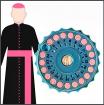 Using abortion to ban contraception
The real target of the Vatican's anti-abortion campaign is family planning. The Vatican defines any reliable method of contraception as either "abortion" (as with the pill) or as "anti-life", (as in the case of condoms). It's a fancy theology of unrestricted breeding. Yet it didn't have to be this way, and in the 1960s it even looked as if Catholic theology would be interpreted to allow the pill.
|
|
|


 How anti-contraception groups hijacked the Russian health service (2017)
In Russia the Vatican-Orthodox alliance to boost population faces opposition in clamping down on contraceptives and abortions. The Russian health system still ensures access, and women regard this as their right. With few private clinics, the US activists’ strategy of legal harassment and intimidation won’t work. So a bottleneck was introduced into the state hospitals. “Abortion counselling” has been designed to make women feel like murderers.
 A biologist sets the pro-lifers straight
Prof Guttman calls arguments about “life” a red herring. It’s really about keeping women “subservient” and denying them their human rights. Furthermore, the “pro-lifers” misrepresent the very concept of “life”, because eggs and sperm are just as much “alive” as people are. “All the talk about how human life begins at the moment of conception is sheer nonsense” — which doesn't stop it from being enshrined in the law of places like Kansas.
 Political deal lets Vatican in on new Dominican Republic constitution
A back-room deal between two politicians is set to make the Dominican Republic the first country to enshrine three current Vatican policies in its new Constitution. One amendment is expected to increase dangerous back-alley abortions and unwanted births in a poor country where more than a third can’t afford enough to eat. But for the Catholic Church it marks a milestone in its programme to promote reproduction at all costs.
 Vatican religious alliances to end family planning worldwide: timeline
The Vatican alliance with the US Evangelicals to outlaw contraception has limited access worldwide. It has made the US public reluctant to contribute to health clinics in developing countries and to the UN Population Fund. This alliance was then extended to include the large Russian Orthodox Church and the Chief Rabbinate of Israel. Now the Vatican — doubtless with its eye on China — is making overtures to the Buddhists.
 Religious law vs. human rights: child brides
Sharia isn't the only kind of religious law that permits child brides. Until 1929 Church of England ministers could marry 12-year-olds in Britain. And until 1983 a quiet loophole in Catholic canon law permitted priests to marry off brides of 12, as well. Now the minimum age allowed by the Vatican for young girls to marry is 14.
 The Rights of Man reach an Ivorian village
How can people be helped to see their traditions not simply as the way things are, as a problem if these traditions trample on human rights? An appeal to something more important than cultural or religious tradition is a revolutionary idea. This account by human rights workers captures the excitement on first hearing about human rights — the same thrill felt in Europe two centuries ago, as among the women of the Côte d'Ivoire today: “We have rights!”
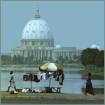 Côte d'Ivoire
A concordat was made especially for “the basilica in the bush”. This pink marble church, built by an ailing dictator who was worried about his soul, was planned to top St. Peter's Cathedral in Rome. The funds for its upkeep by this poor African country are guaranteed by this concordat. The Vatican appears to have no qualms about taking the money, but it requires that all financial accounts be kept secret.
 "Mother's cross" and Maria cult
Hitler said that women's bodies belonged to the German people, while the Church claimed that they were the property of the Holy Ghost. But these varying accounts made little difference in practice. Both meant that her body didn't belong to her and should therefore be used to produce the maximum number of soldiers or Catholics. The mother’s cross symbolised both the nationalistic and religious pressures to reproduce.
 An inside look at faith-based social services in Germany
From birth to death many Germans depend on social services that are paid for by the taxpayer, but run by the church. These church institutions, both Catholic and Protestant, operate in accordance with their own religious laws and they affect both employees and clients. These accounts of ordinary Germans show what it means to live in the shadow of religious laws. Many must accept interference in their private lives without complaint, or risk being unemployed.
 Slovak concordat threatens church-state separation and women’s rights
International protests against the proposed "conscience concordat" led to the fall of the Slovak Government at the beginning of 2006. Backed up by legal analysis, Slovak critics, 52 MEPs and 131 human rights and religious groups urged the Slovak Foreign Minister not to sign the “conscience concordat”. And a report by EU human rights experts warned that Vatican doctrine must not be allowed to override human rights and make women suffer the consequences.
 The Church reshapes Polish society
Three Poles report on increased Church influence and restrictions on women since the end of Communism. They wonder if, after winning their freedom from the Communist dictatorship, they are now being threatened by another authoritarian system. “After 1989 women found that a democratically elected government gave them the right to vote in fair elections but took away the right to decide about their own bodies.”
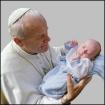 Papal photo-op leaves Slovak mother feeling used
In 2003 Pope John Paul II visited Eastern Europe for the last time. His aim was to discourage any liberalisation of Slovakia’s abortion laws, for that would have made it harder to push through the upcoming concordat on “freedom of (Catholic) conscience” which would have helped end women’s reproductive freedom. This papal visit, his third to Slovakian territory, was planned as an anti-abortion campaign.
 The hallelujah weekend of Ireland throws a long shadow (1979-2018)
The papal visit of 1979 boosted Irish fertility. To try to prevent the Irish government from legalising contraception John Paul II exhorted the women of Ireland to be fruitful like the Virgin Mother. Although contraception was eventually legalised, bit by bit, the ban on abortion remained largely unchanged. It took a series of tragedies — and 39 years — for the Irish to remove the Catholic ban on abortion from their constitution.


