
Concordat Watch - Concordat Watch -
Separation of church and state (secularism)
The objection to concordats is that they weaken the separation of church and state. This separation of two powerful institutions is a pre-condition for the free exercise of human rights. It is true that such separation does not guarantee human rights — as is shown by Communist dictatorships. But it has been proven again and again that lack of separation can threaten human rights — as is shown by societies living under religious rules, whether Sharia, Hindu Law, Halaka or Canon Law.
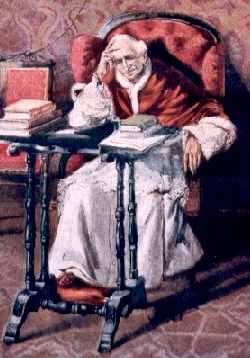
Pope Leo XIII warned against “Americanism”, the separation of church and state, with its “newly given civil freedom”. This led to the “danger” (to his power) of believing in the “right to hold whatever opinions one pleases upon any subject and to set them forth in print to the world”. (Testem Benevolentiae, 1899)
The history has a very important economic aspect. One of the dangers of subsidising religious institutions and granting them financial privileges (such as exemption from income tax, land and municipal rates, sales and other taxes) is that such institutions tend to become extremely wealthy, to aggrandize and to become states within a state. The corrective has often been a more or less violent seizure of the assets of the religious institutions, sometimes by the existing sovereign (as did Henry VIII), sometimes by revolutionary movements, which in many countries have had as one of their main objects the suppression of religious institutions and the seizure of their wealth. (Dissenting opinion, Victoria v. the Commonwealth, 1981, 33 ALR 321, at 358)
The desired separation of church and state can be legally acomplished in three ways: when a Supreme Court unpack a clause in the couintry's constitution, when the constitution itself spells it out, or through a simple "separation law".
♦ The 1791 First Amendment to the US Constitution, which explcitly forbids a state church, was later interpreted more broadly by the Supreme Court as also separating church and state. However, this legal evolution has not taken place in Australia. There a similar clause, s.116, in the 1900 Australian federal constitution is stil interpreted as merely preventing a state church.
♦ Other modern constitutions make it explicit that more is intended than the prevention of a state church. The 1948 constitution of India unpacks the meaning of "secular" in art. 15 and 25-28, and its Supreme Court in 1994 upheld these guarantees. The 1952 constitution of Communist Poland, (Art. 82.2), was less detailed, but its meaning was also clear. The 1961 constitution of Turkey explains "secular state" (Art. 2) through art. 24 and 25. And the 2013 constitution of Fiji explains the same phrase through art. 4 and 22.
♦ And, finally, church-state separation may be effected by legislation enacted by parliament, as in the French Separation Law of 1905.
However, constitutional separation is of little practical use where politicians do not dare to stand up to religious interests. An American doctor, writing about the recurring and needless measles epidemics, has said,
No lawmaker [...] dares to touch religious exemptions. It’s political dynamite. But with an estimated 30,000 children in the United States unvaccinated for religious reasons, that is a dangerous mistake.

- The Archbishop vs. the Prime Minister of Fiji
The Catholic Archbishop Chong was reprimanded by Prime Minister Bainimarama of Fiji for saying that the new constitution separating church and state would deprive Fijians of the right to worship in public. This is a common misrepresentation. However, Amnesty International has warned that this secular constitution still allows human rights violations. By itself, separation of church and state is not enough!

- Australian legal expert talks about secularism in France, the US, India, Malaysia and Australia
The Hon Michael Kirby AC, CMG was Australia’s longest serving judge when he retired from the High Court of Australia in 2009. He delivered a talk about church-state separation (secularism) at the RMIT law school in 2013. Here he sketches the development of secularism in France, the US, India, Malaysia and Australia.

- What is church-state separation (aka political secularism)?
Some opponents of church-state separation redefine it as “state neutrality” to allow their group, among others, to get state funding. Others try to discredit it by conflating separation of church and state with “atheism”. But it's a political, rather than a religious doctrine and its purpose is to help level the playing field in order to give a better chance for human rights.

- Unpacking church-state separation
The aim is to make sure that Human Rights always take precedence over religious demands. But how is this to be done? This useful list shows what the separation of religion and the state means in practice. Religion is protected from interference by the state - and vice versa.

- Seven arguments against church-state separation and how to reply
Some people would like to take over society — at the taxpayers' expense — and they try to depict any opposition to this as persecution. Here's how to deal with their special pleading.

- Roger Williams erects a wall between church and state
In the 1630s, when most of Europe was convulsed by religious wars, Roger Williams decided that this needed to be stopped. He introduced — and put into practice — the powerful new idea that there should be a wall between church and state. In his colony in Rhode Island he erected a "wall" to protect "God's garden" (the church) from the impure world and, at the same time, to give religious freedom to all.

- History of church-state separation in Australia (2012)
This AUSCAS factsheet on church and state in Australia puts it all in a nutshell — from 1836, when an exasperated Australian Governor Bourke wished the churches would ‘roll off state support like saturated leeches’ to 2008 when Bishop Tom Frame said they must be weaned off state support and not rely on the secular state to discharge their ‘heavenly charter’.

- India's secularist ideal under threat
Is India in the process of being turned from a secular state into a Hindu one? The greatest threat to religious freedom in India today are the moves to strip Indian Muslims ofmany of their rights, including citizenship. If the massive protests by Indians from all religious backgrounds do not persuade the Hindu nationalist government to change course, Indian secularism will be finished. No matter what the constitution says, India will effectively become a single-religion state like some of its Muslim neighbours.* However, this pressing issue is too fast-moving to be treated here.
- The legal basis of India's secularism
Secularism is India's national ideal, recognised as the only way to unify a diverse nation. Although now increasingly threatened by Hindu nationalism, it is entrenched in the Indian Constitution and confirmed by a landmark Supreme Court judgement. Excerpts from both are given here.

- French secularism (laïcité) seen as a precondition for human rights
Prof. Maurice Barbier says that separation of church and state prevents the state from supporting any religion or interfering with it ― and obliges religion to leave the public sphere open to all. When both sides respect the boundaries, secularism provides a framework for freedom of conscience, tolerance and democracy. Secularism does not guarantee human rights, but it helps make them possible.
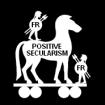
- Quiet retreat from Vatican II’s accomodation to secularism: five experts comment
Excerpts from five important articles, including:
♦ How Vatican II leaves concordat privileges untouched
♦ How, beginning in the 1990s, Vatican II began to be quietly reversed
♦ How Cardinal Ratzinger’s “positive secularism” and 1993 Catechism undermine church-state separation
- Pope tightens rules twice to prevent church-leaving (2006 and 2010)
Faced with mass defections from the Catholic Church after the clerical abuse scandal broke, Benedict XVI tightened up the rules. Then in 2010 he changed canon law to remove the possibility of defection. And national bishops' conferences restrict the notation on baptismal registers of even the wish to defect. Here are church-leaving rules (as of 2011) for Austria, Belgium, Britain, Denmark, Finland, France, Germany, Iceland, Ireland, Italy, Netherlands, Poland, Spain, Sweden and Switzerland.

- First Amendment, controversial basis of US church-state separation
Separation of church (or mosque) and state is a national tradition in the US, France and Turkey. The separation was achieved by the American First Amendment, the French Law of 1905 and the 1961 Turkish Constitution. The earliest of these, the First Amendment, has been defined and redefined by court cases, revealing many different aspects of secularism.
- European Court of Human Rights: No right to state funding for sectarian schools
It is sometimes argued that, by condemning funding to religion, secularism denies parents their right to have their children taught “in conformity with their own religious and philosophical convictions” in sectarian schools. However, the European Court of Human Rights disputes this. It has ruled that this right does not impose on states an obligation “to establish at their own expense, or to subsidise, education of any particular type”.
- Silvio Ferrari on “Church & State in Europe”
This legal scholar advances Vatican views. He’s enamoured of group rights, rather than individual rights (i.e., the “rights” of organisations whose leaders have not been chosen by the electorate). Prof. Ferrari sees no problem with massive social control exercised by a church at state expense, so long as “freedom of conscience” is on the law books. Like the Vatican he redefines separation of church in a way that would permit concordats....


