
Concordat Watch - Concordat Watch -
Follow the money
In terms of their finances, religious institutions can function as “unregulated on-shore tax havens subsidised by taxpayers to pursue the supernatural.”* And if they are Catholic institutions, they then send money to the off-shore tax haven of the Vatican State. But it doesn't end there. The Vatican itself has an off-shore tax haven in the Caymen Islands.
In 2015 a book on Vatican finances appeared which has impressed both Vatican-watchers and financial analysts alike. This review of Gianluigi Nuzzi’s Merchants at the Temple was published in Fortune Magazine.
Another source of information is the bankruptcy proceedings of the American dioceses which were forced to compensate victims of cherical child abuse. These have shed some light on the finances of the US Church. (See “The Catholic church in America: Earthly concerns”. The Economist, 18 August 2012.)
Of course, the Vatican isn’t the only church that tries to keep its accounts secret. The Greek Orthodox Church claims it has no idea about its own finances, even though it owns more land than anyone except the state, employs thousands on the public payroll and has a stake in the nation's biggest bank.
 Vatican Bank (Institute for Religious Works) (2014)
Until three international monetary watchdogs began applying pressure, the “murky” IOR had secret accounts, no audits and records destroyed after ten years. To keep using the euro, it agreed in 2009 to submit to the anti-money-laundering laws of the European Union, but has only done the minimum demanded of it. It issued its first ever financial report in 2013. And now its own financial accountability body is shielding it from scrutiny.
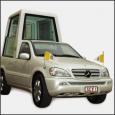 The secret costs of papal visits
Both sides try to keep the costs of papal visits hidden from the taxpayers. The security costs, the largest item by far, never seem to be included in published government figures. An Australian government declared the total expenses to be a state secret. And it has been revealed that to pay for the Pope's state visit the British Government quietly diverted money meant for aid to the world's poorest people.
 Spanish Catholics protest new way to hide papal visit costs
The Pope visited Spain in August 2011 for the Catholic Church’s World Youth Day. In May the jobless rate among Spain’s generally well-educated young people reached nearly 45 percent, a record in any industrialized country. Despite this “lost generation” a huge religious festival was staged at public expense ― with the Pope’s wealthy corporate sponsors only paying for 20 percent of “their” donations.
 Church, state and money: How Italy subsidises the Vatican
The Vatican Secretary of State objected to the publication of these revealing articles, telling the Italian newspaper “Let's stop this”, but he has not disputed their accuracy. Here is the complete groundbreaking series from La Repubblica, as well as updates on Europe’s belated move to challenge Italian subsidies to the Church under the EU competition rules — eleven articles specially translated for Concordat Watch
 The new indulgences: Fly with us to purge your sins
The Vatican has stopped selling indulgences directly, but it still profits from offering this type of penance for one’s sins. The pilgrimage for an indulgence may be booked through the Vatican’s own travel agency, which books flights on the Vatican airline and rooms in one of its tax-exempt hotels in convents. In fact, those who don’t use the Vatican travel agency, may even find themselves turned away from the pope’s audiences for pilgrims.
 Land and money for the Church while a quarter of Polish children go hungry
The Polish government can afford to subsidise Church influence in every corner of society, from chaplains throughout the civil service to holiday pay for monks and nuns, but is unable to provide free school lunches for Polish children, a quarter of whom are malnourished. This is an itemised list of state subventions to the Church for 2008.
 Ivorian President “did a deal with God” — by way of the Vatican Bank?
Realising that taking money from the dictator of a poor country was a “delicate matter”, a concordat was used to ensure financial secrecy. Enacted with no legislative assent, this agreement with the Vatican guarantees that the massive funds for the cathedral, (claimed to be from the President's private fortune), be kept tax-free, secret, able to be sent abroad and remain beyond the reach of the law.
 Conscience clause: Vatican hobbles competing clinics with Church rules
It can pay well to force Church doctrines on the general public. The Vatican stands to profit from its moves to prevent the United Nations and national governments from funding birth control and abortion services. Keeping these out of all the clinics removes the competitive disadvantage of non-Catholic ones. For an example of this worldwide strategy, follow the health dollars in the US.
 German taxpayers subsidise 98% of faith-based social services
Few know that social service employees of German religious organisations number almost 2½ million. And most Germans themselves have no idea that their churches pay for less than 2% of their “good works”, with the taxpayer left to foot the rest of the bill. This is revealed in an important essay, available in English for the first time, by Dr. Carsten Frerk, an authority on German church finances.
 The Hidden Wealth of the German Catholic Church
Only the budget of the diocese, (funded by the “church tax” on its members), is public. The rest, accumulated over centuries and invested widely, forms a shadow budget, known only to the bishop and his closest associates, and not reviewed by the tax authorities. Despite cash assets estimated at about €50 billion, the Church is cutting back its own small contribution to its “good works”, threatening many with closure. (Spiegel, 14 June 2010)
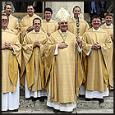 Millions for the bishops: Why the German state pays the wages for the church
How did Germany become the cash cow of the Vatican? An English transcript of the lively Spiegel video from 7 June 2010 reveals this unknown story. A few weeks after it came out, German politicians broke a taboo and began to publicly question their 200-year-old tradition of taxing everyone for the salaries of clerics at a cost of €460 milllion every year.
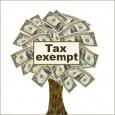 Research report: Subsidised religion in the US
A 2012 study shows that religions receive at least 40 percent of the huge subsidy given to agriculture in the United States (and probably far more). This includes state funding through exemptions from income tax, property tax and investment tax, parsonage exemption and direct subsidies through faith-based initiatives. Yet they devote a far smaller proportion of their funds to welfare work than secular charities, and not much more than corporations.


