



 List of some Latin American concordats
This is an (incomplete) list of Latin American concordats beginning in the later 19th century. The Spanish concordat of 1851 was retained by the American colonies of Spain which later won independence. They wanted to be regarded as successors of the historical and legal obligations of the Spanish crown, so as to retain the right of patronage over the Catholic Church in their territories.
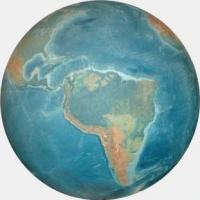 Concordats were delayed in Latin America, first by the power of the King of Spain, and later by political instability and Vatican opposition to the independent new republics.
Rome's concession of powers was phenomenal. [...] Part of the the reason for its delivery of the American church to the Spanish crown was precisely that the Indies were a challenge of evangelisation on a scale that Rome could not itself meet, the task had to be delegated: the patronato was the cost of doing so. [1]
From the 16th century "His Most Catholic Majesty" exercised control over the Church in his American colonies. "The Patronato Real (Royal Patronage), … gave the crown ample powers over the demarcation, administration, and finances of the American dioceses, including the nomination of bishops."[2]
Through the Inquisition, which operated according to Canon Law, the Catholic Church also exercised direct control in both Spain and its American colonies. In the Americas the Inquisition held courts in Mexico City, in Cartagena (Colombia) and in Lima (Peru). These Church courts had the power to try, torture and condemn to death, usually at the stake, anyone who committed heresy, and they could rely on the state to carry out their judgements. In this situation concordats were not necessary in Latin America. As the Catholic Encyclopedia puts it, “…It were to be desired that the Church should never need concordats, and should always find in civil rulers devoted children….” [3] King Ferdinand VII of Spain was just such a ruler.
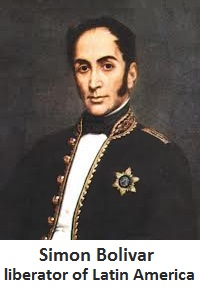 The Inquisition's three courts in the Americas were finally abolished in 1820. By then the priest Miguel Hidalgo y Costilla had launched the Mexican War of Independence and Simon Bolivar was leading the independence movement against the Spanish king in South America. Both were excommunicated by the Church. In vain, Pope Pius VII instructed his bishops in America to "show your sheep with all the zeal you can the terrible and grave prejudice of the rebellion, and the famous and unique virtues of our dearest son in Christ, Ferdinand, Your Catholic King..." [4]
After independence, the new 1851 concordat with Spain was taken over by its former colonies, with the traditional privilege of the Spanish king to appoint bishops transferred to the new countries as the Patronato Nacional (National Patronage). Finally Pope Gregory XVI (1831–1846), recognised the new republics in Latin America. After that followed concordats which were intended to restrict power of the state enjoyed under the Patronato Nacional. These were negotiated much later, generally after mid-century — if at all — Costa Rica (1852), Guatemala (1852), Haiti (1860), Honduras (1861), Nicaragua (1861), El Salvador (1862), Ecuador (1862), Venezuela (1862), and Colombia (1887). [5]
The list of concordats given below is compiled from various sources, with no guarantees for the completeness for any of them. The date given is when the concordat was signed by the heads of state or their representatives, not when — or if — it was ratified by a legislature. (That can be checked here.) Of course, in the case of a dictator legislative approval may be dispensed with altogether. Another advantage to the Vatican in concluding a concordat with a dictator is that these agreements remain valid, even when there is a return to democratic government — because they are "international treaties". Thus the concordats with Duvalier (Haiti) Trujillo (Dominican Republic), Aramburu and Onganía (Argentina) are still in force, long after their dictatorships have ended.
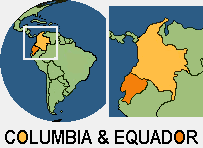 There are two traditional concordat hotspots, Columbia and Equador. As usual, these are the legacy of Vatican-friendly heads of state. In Columbia, President Rafael Núñez proclaimed a national "regeneration", brought in an authoritarian new constitution and gave his country its 1887 concordat, the first of many. [6] In neighbouring Equador, President Garcia Moreno ceded complete control of education to the Church, forbade heretical (non-Catholic) worship and arranged the 1862 concordat for what he called the "Republic of the Sacred Heart". [7] In contrast to these conservative countries, the radically secular Uruguay has never had a concordat in its entire history.
Countries marked with an asterisk have cancelled their concordats and not replaced them as of 2014.
Argentina
28 June 1957 Accord between the Republic of Argentina and the Holy See on Church jurisdiction in the military service and pastoral care in the Armed Forces.
10 October 1966 Accord concerning ecclesiastical organisation.
21 April 1992 Diplomatic Note on modifying the Accord about Church jurisdiction in the military service and pastoral care in the Armed Forces.
Bolivia
4 December 1957 Convention on Missions, Supplement
29 November 1958 Accord on Church jurisdiction in the military service and pastoral care in the Armed Forces.
1 December 1986 Accord on Chaplaincy in the Military and National Police
Brazil
23 October 1989 Agreement on pastoral care in the Armed Forces
13 November 2008 Agreement between the Federal Republic of Brazil and the Holy See on the legal status of the Catholic Church in Brazil
Colombia 
31 December 1887 Concordat (summary)
20 July 1892 Supplementary Concordat to 1887 Concordat
"In 1898, and following at ten year intervals, supplementary conventions were negotiated establishing the amount the government should appropriate to the Church. " Cf. Mecham, Church and State in Latin America, 132.
1902 Convention (concerning missions)
April 1942 Convention (which modified 1887 Concordat)
1953 Concordat (concerning missions)
12 July 1973 Concordat and Final Protocol
17/18 July 1974 Exchange of notes for the setting of an end-date for the 1973 Concordat
2 July 1985 Exchange of notes on the 10th anniversary of ratification of the Concordat
20 November 1992 Agreement on modification of the 1973 Concordat
*Costa Rica
7 October 1852 Concordat
After Laura Chinchilla became president in 2010 she tripled the Costa Rican contributions to the Catholic Church, which is the state religion, and two years later met Pope Benedict XVI to discuss the "negotiation of a concordat".
Dominican Republic
March 1884 Convention
16 June 1954 Concordat and Final Protocol
21 January 1958 Accord to regulate pastoral care in the Armed Forces (Vicariato Castrense)
11 May 1990 Supplementary Protocol on the Military Ordinariate (Supplement to the 1958 Accord)
Ecuador
26 September 1862 Concordat
2 March 1881 [New Version of 1862 Concordat (suspended in 1887)]
8 November 1890 Concordat
24 July 1937 Modus vivendi and Supplementary Convention
3 August 1978 Accord concerning pastoral care in the Armed Forces and the National Police
27 January / 6 July 1982 Exchange of Diplomatic Notes on Pastoral Care in Military and Police
El Salvador
22 April 1862 Concordat
11 March 1968 Accord on Church jurisdiction in the military service and pastoral care in the Armed Forces and Security Corps
*Guatemala
7 October 1852 Concordat
2 July 1884 Concordat
Haiti
28 March 1860 [first] Concordat
12 March 1861 Convention about ecclesiastical boundaries
17 June 1862 Convention
25 January 1940 Convention
15 August 1966 Protocol relating to Article 4 of the Concordat on the appointment of bishops
8 August 1984 Protocol Renunciation of the right to appoint bishops
*Honduras
9 July 1861 Concordat
*Nicaragua
2 November 1861 Concordat
Paraguay
26 November 1960 Accord on the Military Vicarship and Supplementary Protocol
24 December 2002 Convention about pastoral care in the armed forces and the national police
Peru
19 July 1980 Accord on matters of mutual interest
Venezuela
26 July 1862 Concordat
6 March 1964 General Accord
24 November 1994 Accord to create a Military Ordinariate
Notes
1. Peter John Bakewell, A History of Latin America, Second edition, 2004, p. 138. Google reprint
2. Luis N. Rivera-Pagán, "A Prophetic Challenge to the Church: The Last Word of Bartolomé de las Casas", lecture at Princeton Theological Seminary, 2003. http://www.lascasas.org/Rivera_Pagan.htm
3. Leo Kelly and Benedetto Ojetti, “Concordats”, Catholic Encyclopaedia, 1908. http://www.newadvent.org/cathen/04196a.htm
4. Pius VII, La Enciclica Legitimista de 1816. http://www.franciscanos.net/500anos/LA%20ENCICLICA%20LEGITIMISTA%20DE%201816.htm Also at http://nucleodelalealtad.blogspot.com.br/2007/10/enciclica-legitimista.html
5. Thomas J. Williford, "Chapter II: Two Competing Nationalisms: Development of the Colombian Political Process to 1930", Armando los espiritus: Political Rhetoric in Colombia on the Eve of La Violencia, 1930-1945, 2005.
http://etd.library.vanderbilt.edu/ETD-db/available/etd-07222005-085639/unrestricted/WillifordDChap2.pdf
6. Vicente Prieto, "Law and Religion in Colombia: Legal Recognition of Religious Entities", Brigham Young University Law Review, 2013-01-31. http://lawreview.byu.edu/articles/1360276616_06prieto.fin.pdf
7. William R. Shepherd, "Chapter V. The Age of the Dictators", The Hispanic Nations of the New World, a Chronicle of our Southern Neighbors, Yale University Press, 1919. http://www.cumorah.com/etexts/hispn10.txt
8. Serge Lafitte, "The world’s reconstruction, The Vatican’s strategy", Enjeux internationaux [2006]. http://www.enjeux-internationaux.org/articles/num15/en/vatican.htm

