



 Twenty tricks to get a concordat through
Here are 20 tricks to help get a concordat signed and ratified, with examples to show how these dodges work. This is your guide if you hope to become the Vatican's foreign minister (“Secretary for Relations with States”). Above all, don’t forget the “mousetrap clause”. This frees the concordat from democratic control forever and lets you move on to the next one. Fortuna!
If concordats are really about “the welfare of mankind” and building “a more fraternal, peaceful and just society” it’s a bit puzzling that the Vatican has often resorted to pressure tactics and even legal tricks to get them ratified. Here are some tested tips on how to get a concordat through.
1. Call it something else — convention, treaty, endorsement, agreement, whatever.
This is the easiest way to get a concordat through. Amazingly, this simple manoeuvre has worked reliably for more than 200 years. (See “Why aren’t they all called ‘concordats’?”)
♦ The first tap-dance around the word “concordat” took place in France when Napoleon called his 1801 concordat a “convention” (convention) to try to avoid the suspicion that he'd betrayed the Revolution. This tactful term was again used by a restored Bourbon monarch for two further concordats in 1828. Revisions of these (in 1974, 1999 and 2005) were called “endorsements” (avenants). And the 2008 concordat on higher education is called an “agreement” (accord).
♦ In Prussia the Lutherans objected to the 1929 concordat negotiated with the papal nuncio Pacelli (the future Pius XII), whereupon he suggested calling it a “solemn convention”. Everybody was pleased. [1] Today it is officially titled a “treaty” (Vertrag).
♦ In Brazil, with its secular tradition, a euphemism also proved useful, and the 2009 concordat is officially known as an “agreement” (acordo).
2. Make it with a dictator.
Then the dictator’s signature (or that of one of his generals) is all you need to get the concordat through. You've no worry that a democratic legislature might block the agreement. As a Superior General of the Jesuits put it, “The Apostolic See, to avoid the risk of open mockery, usually enters into solemn undertakings only where a civil government is under no obligation to seek the consent of a representative body....” [2]
♦ In Peru the Vatican got the military junta to ratify the concordat on 26 July 1980, just two days before the new democratic constitution came into effect, which would have required that any international treaty be approved by Congress.
♦ In Austria the Vatican began concordat negotiations with an authoritarian, but duly elected politician and concluded them after he’d become a dictator. By then Dollfuss had banned all parties whose members were likely to question the concordat. That left him with fewer ratifying votes than were required by the constitution, but that didn’t stop the Austrian concordat any more than it stopped the Polish one (see trick â„– 7 below).
♦ Concordats have been signed by many other dictators who had no need to seek ratification by a democratically-elected legislature. These include Mussolini in Italy (1929), Hitler in Germany (1933), Salazar in Portugal (1940), Franco in Spain (1953), the Duvaliers in Haiti (1966 and 1984), Trujillo in the Dominican Republic (1954), Dollfuss in Austria (1933), Aramburu and Onganía in Argentina (1957 and 1966), Bermúdez in Peru (1980), Houphouët-Boigny in Côte d’Ivoire (1992) and Tudjman in Croatia (1996).
Even in the 21st century the Vatican has continued its tradition of making concordats with strongmen. In 2019 the framework concordat with the Central African Republic was ratified, not by a legislature, but by the acting president, Faustin Archange Touadera. (He also gets to appoint the country's judges, all the way up to the Supreme Court, and they can hear witchcraft cases, as this is a criminal offense under the CAR penal code, just as it was under mediaeval Canon Law.)
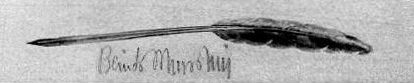
3. Seek compliant politicians, if no dictator is available.
The top Jesuit continues his advice about getting a concordat through: if faced with the inconvenient prospect of a legislature, he recommends confining the attempt to where “there can be no reasonable doubt that such consent will be granted.” This means courting politicians. And don't forget to cash in on debts of gratitude. One remarkably favourable legal and financial deal for the Vatican was said to involve “quiet calls between influential folk in the high ends of the establishment, that the Church was calling home favours from old friends in high places”. [3] Other politicians will help push through the concordat because, for one reason or another, they are more beholden to the Vatican than to their electorate. Presidents nearing the end of their career are especially promising, since the Vatican can offer them post-political perks, including guest lectureships at Church universities, diplomatic postings to the Vatican and even support if they run for office in international bodies.
♦ To get important laws through before he stepped down, Brazil’s President Luiz (“Lula”) da Silva needed the support of Vatican-friendly politicians, and a secretly-signed concordat appears to have been the price.
♦ Poland's Hanna Suchocka was not expecting to be re-elected as Prime Minister, and after she helped get the concordat signed, she embarked on a Vatican career as Poland’s ambassador to both the Sovereign Order of Malta and the Holy See.
4. Start small — offer reluctant partners limited agreements
Some countries have historical reasons for being wary of entering an agreement with the Vatican. The French and the Czechs, for example, have painful memories of the Counter-Reformation, and the Chinese have not forgotten Western missionaries who were shielded by gunboat diplomacy. With such countries it is best to move cautiously, either by demanding less than usual in a general concordat, or by limiting the scope of the concordat to an area of particular concern to that country.
♦ The wary Czech parliamentarians were offered a draft concordat in 2003 which begins with a soothing reference to Vatican II and ends with the unusual assurance that either party can cancel it at any time.
♦ With a Catholic population of less than 2 percent, Taiwan would seem to be an unlikely concordat partner, yet in 2011 it concluded an agreement with the Vatican on education. This highly literate, but politically isolated nation hoped the concordat would help it to “enter the international academic world and to play an active role in the field of higher education...on a global level”. [4]
♦ The French got a similar education concordat with the Vatican, but it came by the back door. It was signed by President Sarkozy in 2008, and then, instead of being presented to the legislature for ratification, it was ratified by two of his political appointees. This was made possible by classifying it as an “accord” rather than a “treaty”. Like the Czech draft concordat, the French agreement also has the highly unusual provision that it may be cancelled unilaterally. Once the concordat is in place, however, that may well not be feasible politically.
5. Make the concordat with yourself by having a secret member of a religious order negotiate it with you.
Catholic religious orders like Opus dei and the Sovereign Military Order of Malta (SMOM) contain laymen whose membership is often revealed only when they die. Thus they can give the appearance of negotiating on behalf of a nation, whereas they actually belong to an organisation which is under constant supervision by the pope and they owe allegiance through religious vows to the Vatican. [5] High-ranking members of the Order of Malta have turned up as signatories on a couple of concordats, raising the question: on whose behalf were they really negotiating?
♦ Franz von Papen who negotiated and signed the 1933 concordat and its secret supplement, ostensibly for Germany, was a Knight Magistral Grand Cross of the Order of Malta. [6]
♦ Francesco Cossiga was President of the Italian Senate when the 1984 concordat was ratified and few months later he became acting President of Italy. This key player in getting the concordat through was also a Bailiff Grand Cross of Honour and Devotion of the Order of Malta. [7]
♦ Guido De Marco, who was Minister of Foreign Affairs of Malta charged with negotiating and signing the 1993 marriage concordat on its behalf, was also a Bailiff Grand Cross of Honour and Devotion of the Order of Malta. [8] In 2003, as President, he signed the treaty which brought Malta into the European Union [9] and which also exempted Malta from any EU human rights legislation concerning abortion. [10] Again, one could ask who he was representing: Malta or the Vatican?
6. Make no concordats in the middle of a war.
Wait, and then negotiate with the victor. There is a danger in too frequent alterations, since the more the concordat is amended, the more symbolic power is lost. It should remain unthinkable that concordats could be changed or scrapped at will.
♦ During the Second World War the only major concordat was made with Portugal, which kept out of the conflict.
♦ And, although Spain’s dictator, Franco, was firmly allied with the Church, during the war the Vatican was only willing to give him a less official "convention" ("convenio"), waiting until 1953 (when it was finally clear that his regime would survive in democratic post-war Europe), to let him have his concordat.
7. Use negotiating tactics like timing, “the nibble” and “good cop, bad cop”.
You must know what to ask for, but be careful about when you ask for it. There are times to press ahead and times to wait. You will also want to keep back certain items on your want list until the very last minute when the other party is vulnerable. And it can even be useful to let a hardline negotiator precede you, so that you can appear kind and reasonable and harness the gratitude for this in order to finally get the concordat moving.
♦ The Czech Republic rejected an already-signed concordat in 2003. This time the Vatican is proceeding carefully and is not pressing for compensation to the Church for lands nationalised by the former Communist government ― until the “economic recovery”. Timing is everything. [11]
♦ In Austria the insecure Dollfuss, was ripe for the “nibble”, the technique of making last-minute demands for further “slight changes”. He feared both assassination and a German invasion and wanted the protection of the Vatican. (He even had the Pope bless a crucifix which he dropped out of a plane onto the family farm to protect his relatives.) Dollfuss was anxious to sign the concordat quickly before Cardinal Pacelli (the future Pius XII) could make any more last-minute demands.
♦ The Czech archbishop who before an election publicly questioned the President’s fitness for office was replaced in April 2010 by a new and very friendly archbishop who gives him Christmas presents. The Vatican appears to be playing “Good archbishop, bad archbishop”.
8. Keep the text secret at least until it’s signed — and sometimes forever.
This presents the legislators with a fait accompli: with a document already signed by their head of state and one which can no longer be amended. That's because signing expresses consent to the text of treaty, even though it doesn't mean willingness to be bound by it. [12] After signing, the concordat can only be accepted or rejected as a whole, and for members of the ruling party to reject the concordat signed by their own leader with the Holy Father is politically hardly an option. [13]
♦ In Poland no one except the Government negotiators, who were all Catholics, could see the concordat draft until it was signed in 1993. It was held secret even from the MPs who, once it was signed, were only able to vote on accepting or rejecting it as a whole. By that point amendments were no longer possible.
♦ In Georgia, too, the text was kept secret until it was to be signed in 2003. The local Orthodox Church objected that it wanted to know what the text said. [14] Patriarch Illa II also pointed out that when his church made an agreement with the government the year before “people knew the details of that document; it was publicly discussed.” [15] After thousands of Orthodox faithful, including at least one high-ranking cleric, protested in the streets, the government cancelled the signing. (A couple of years later, to the discomfiture of Georgia, the Vatican bestowed “humanitarian aid” Abkhazia. This amounted to Vatican recognition of a breakaway Georgian province. (See trick â„– 14 below.)
♦ The text of the 2003 German concordat in Brandenburg was to be held secret until it was safely signed, but then a mole revealed the text. [16]
♦ Still better is when you not only keep the concordat text secret until it’s signed, but even shield the head of state from his country's press. You can have him make what is billed in advance as a courtesy call to the Vatican, and then quietly usher him into the “Treaty Room”. This how it was done with the Portuguese dictator Salazar in 1940 and the Brazilian President, da Silva, in 2008. (See Was Brazil’s “stealth concordat” the price for electing Dilma?) When the Brazilian legislators discussed the concordat in 2009 some of them wanted to alter the text, as they were accustomed to do before passing a new law. However, the President of the Chamber of Deputies told them that this would require Vatican assent, and they backed down. [17]
♦ And, best of all, is when you are able to secure the cooperation of a government to keep the text of an agreement secret forever. The 1964 modus vivendi made with Hungary has been suppressed, presumably because it shows that, if it has to, the Vatican is even willing to let its bishops be chosen by a Communist regime. If that were widely known it could set a dangerous precedent for future negotiations.
And this is not just something from the past. In 2015 the Vatican refused to publish the text of the text of the concordat it made taht year with the Palestinians, and even denied repeated requests from Israel to see it. The Israeli government is concerned that the treaty between the Vatican and the Palestinians could contradict their own concordat. [18]
9. Get the concordat ratified by any means possible, legal or not.
Once the concordat is signed, try to schedule it to be ratified within a few days, if possible. This prevents a proper parliamentary debate, cuts off public discussion and leaves no time for outside legal experts to examine a complicated document written in opaque language.
♦ The controversial Slovak Concordat of 2000 was ratified only sixteen working days after it was tabled.
♦ If, despite your best attempts at “discretion”, the concordat has attracted too much public attention, try to cut off the debate and rush it though by changing the ratification procedure. This was the intention in Brazil, where a new law was even proposed to change the requirement that a treaty no longer require the approval of Congress, but could be approved, instead, by a government committee. (However, this proved unnecessary and in the end the concordat was ratified in the normal way.)
♦ And, finally, if you can’t get the concordat ratified too soon for any opposition to have time to form, and you can’t get the ratification rules changed — just ignore them, even if this means violating the constitution. The Polish concordat was passed by a simple majority, even though the Constitution required a two-thirds majority.
10. Sit tight and apply constant pressure, if you can’t get it ratified right away.
An upcoming election may make the government seek Church support, or perhaps a more Vatican-friendly government will come into power. As a Church official, you do not have the politician’s problem of being ineligible for a “third term” and can simply wait out any elected official who will not comply. Unlike him, you will remain in office for as long as the pope sees fit and your successor will faithfully carry out the policies you have pursued. Thus time is on your side. Furthermore, concordats work like a ratchet: any progress will be preserved and any setbacks won’t.
♦ The year before the Slovak presidential and parliamentary elections of February and September 1998, the Vatican sent its foreign minister to negotiate the first concordat.
♦ Even in Poland — though it took five years, a change in government and two papal trips — the concordat was finally ratified in 1998
♦ The Czech President, who said he’d never sign the concordat, was then courted by the new Archbishop who went hiking with him and gave him Christmas presents.
11. Skip the ratification, and even conceal this with Latin.
This trick has been pulled with at least two democratic countries where normally a concordat would need to be ratified by an elected legislature.
♦ The 1989 military concordat with Brazil ends with a statement in Latin that it will come into effect on the same day it is signed.
♦ Malta's 1993 marriage concordat also says in Latin that it will come into effect automatically, in this case, less than two months after it was signed. This was the concordat made with Guido De Marco who officially represented Malta, but also belonged to a religious order headed by the pope. (See trick â„– 5 above.)
With dictators, there may be a rubber-stamped ratification by their governments, or even no separate ratification at all. The very act of signing amounted to ratification in the concordats with some dictators. These include the Duvaliers in Haiti in 1966 and 1984, General Onganía in Argentina in 1966 and many more.
12. Pre-empt the country’s constitution so that it cannot include human rights provisions tough enough to conflict with a concordat.
Even if you only have time to get your concordat signed, but not ratified, this can do the trick. Then you have a legal fait accompli, where the constitution or other basic laws must accommodate themselves to the concordat, rather than vice versa. This way the Vatican can influence the country’s most basic legal structure.
♦ A 19th-century dictator of Colombia, Rafael Núñez, brought in a constitution in 1886 which proclaimed that “the Apostolic Roman Catholic Church is that of the Nation”. If you weren't Catholic you couldn't be a Colombian. Not much conflict between that and the concordat that he signed the next year.
♦ Similarly, Italy's postwar Constitution of 1947 had to accommodate itself to the 1929 Concordat made with the dictator Mussolini.
♦ Key parts of the 1933 concordat made with dictator Englebert Dollfuss were incorporated into the 1934 Austrian Austrofascist Constitution.
♦ The year after the death of the Spanish dictator Franco in 1975, his concordat was quickly modified to prevent it being scrapped altogether. Next came the 1978 Constitution, too soon to allow for concordat negotiations. However, the four replacement concordats were ratified by the end of 1979. This put them ahead of the Religious Freedom Law of 1980, which gave the general principles of the Constitution a precise legal interpretation. Thus, the 1980 Religious Freedom Law only applies to the other denominations: Catholic affairs were already regulated by the 1979 concordats. [19]
♦ And in Poland the concordat was first signed, then used as a basis for the new constitution which was designed to ensure the concordat's ratification. The old constitution which had endorsed separation of church and state was replaced with one that talked vaguely of “the mutual independence of each in its own sphere”, the Church, of course, being allowed to help determine what its proper sphere should be. Even Church sources admitted privately (with great delicacy) “that the concordat arrangements anticipate the Constitution, [and] to some extent are its preparation”. [20]
♦ In Slovakia, on the other hand, the Constitution, which was already in place, was amended to give the draft “conscience concordat” precedence over national legislation. The Slovak Precedence Clause removes the concordat from parliamentary control.
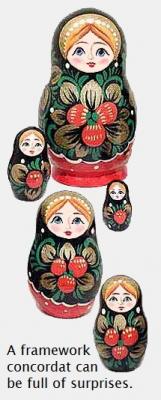 13. Use the softly-softly approach of the “framework concordat”.
This treaty is like a Russian doll: it promises further treaties, with the details to be negotiated later. This gradual approach helps you surmount political opposition.
♦ This strategy proved invaluable in Slovakia, where the brief “Basic Treaty” of 2000 set out the principles in abstract terms. It was only when the follow-up “Conscience concordat” spelled out their detailed implementation, that most Slovaks realised how this could curtail their freedom. But no matter: in principle they have agreed to this and constant pressure from the Vatican has led to in enshrining some of the demands of the “conscience concordat” in Slovak law. Of course, the Vatican wants this set in stone and so is still pressing for the concordat to be pushed through, despite the objections of European Union human rights experts.
♦ A framework concordat also proved useful in Israel. In 2007 when the Israeli Government was reluctant to undertake the follow-up concordats mentioned in the framework one, a high Vatican official publically accused it of breaking its “promises”.
14. Lay the groundwork even before the formation of a new country.
It’s an open secret that the Vatican is one of the backers of the Unrepresented Nations and Peoples Organization (UNPO) and thus seeks to make contacts with emerging states seeking diplomatic ties. In 2002 UNPO created a new senior position within the organisation and appointed Karl von Habsburg as its first Director-General. His family has faithfully served the Church for generations. His grandfather was the Blessed Charles of Austria and his father, Otto von Habsburg, a top-ranking member of the papal Order of Malta, sponsored the remarkable political picnic of 1989. This delivered a strategic blow to Communist control and ultimately helped establish the Church as a major service provider in Hungary today — with its own “concordat”, the 2010 agreement between the Order of Malta and Hungary. (See trick â„– 20 below.)
In other situations, getting in on the ground floor of a new nation involves tacitly encouraging the separatist ambitions of a Catholic enclave. Once this has been split off from a less amenable country, it’s much easier to get a concordat.
♦ In 1990, to the consternation of the Czechoslovak Government, John Paul II visited the Slovak part of the federation, where he kissed the ground, as if he was entering a different country. And the Slovak bishops, in “coded” pronouncements to the faithful, accentuated the abstract right to self-determination and made no call for a referendum which would probably have prevented the breakup. [21]
♦ In 2006, to the indignation of the Georgian government, the Vatican hinted at recognition of Abkhazia. In a case like this it’s a good idea to switch from your political to your religious hat and claim that your dealings have nothing to do with politics, but merely concern “humanitarian aid”. (See Vatican ambassador summoned to Georgian Foreign Ministry after a visit to Abkhazia.)
 15. Offer to share the cake.
Give them a sliver so that you can keep the rest of the cake for yourself. Citing the ecumenicism of Vatican II, encourage their “church-state agreements”. These lack the clout of an international treaty, but they serve to make the other “recognised” religions feel important and give you backing for your own concordat.
♦ As a Catholic theologian wrote in 2000, “the Catholic Church has opened the way for all religious communities to enjoy the same rights”. [22] Objections by other religions have been met by the advice to negotiate their own “concordats”. In Germany as early as 1925 the Bavarian concordat was accompanied by church-state agreements with both the Lutherans and the Calvinists. [23] This share-the-spoils strategy also works for church tax: in Italy an intesa. (The Italian concordat-intesa system still leaves you with 90% of the cake. Bonus gustatus!)
♦ And for the first time the concordat signed with Brazil in 2008 explicitly includes the right of other religions to conduct religion classes in state schools (Article 11).
16. Use promises.
Naturally, we won’t mention the private “understandings” with conservative Catholic politicians, let alone the vows of obedience to the Vatican which bind secret members of Opus dei and the Order of Malta.
♦ Poland's Deputy Minister of Foreign Affairs reported in parliament that the Vatican promised the president that Poland's "Interpretation" of the concordat would be added to the text as a Supplementary Protocol which would be recognised by both sides. Then in the end it balked and refused to recognise the Polish input.
♦  Another kind of promise is given to former Communist-block countries which eagerly accept Vatican offers of help in getting into the European Community, with its job opportunities, subsidies and prized euro. The price, of course, is a concordat.
This prospect is aiding the negotiations with Belarus. The Vatican wants a concordat with this overwhelmingly Orthodox country, in return for a promise to help it with what Cardinal Bertone called “Belarus’s role and place in the international community”. As a Belarusian commentator put it hopefully: “The cardinal could be a sort of intermediary between Europe and Belarus. And an influential intermediary at that.” (Some may suspect that to get this Stalinist relic accepted by the EU, the Vatican would need to work a miracle — but then that’s its specialty.)
Another example is Serbia, which is also aspiring to membership in the EU. A major roadblock was removed in 2011 when the "Butcher of Bosnia" was finally arrested by Serbian police and handed over to the international war crimes tribunal in the Hague. [24] After that, when the long-awaited accession talks had finally begun in 2014, the Vatican concluded a "wedge concordat" involving such topics as "mutual recognition of academic qualifications". [25] (See trick â„– 4 above.) The Vatican's foreign minister delicately implied that a concordat with the Vatican would help to remove the stain of the 1995 genocide and the difficulties faced in trying to bring its perpetrators to justice.
According to Mamberti, the agreement could bring only good things to Serbia as it will contribute to it being recognized at international level as a state that respects human rights through the practice of religion. [26]
17. Use threats.
In addition to behind-the-scenes pressure, public opinion can also be brought to bear on key politicians in order to nudge the negotiations along.
♦ Call the concordat a human rights treaty and try to blacken the name of any country that shows reluctance to sign it by implying that it has reneged on its international commitment to human rights. After being sent packing when he arrived to sign a concordat with Georgia, the Vatican foreign minister said “The Holy See hopes that Georgia, member of important international conventions on human rights, knows how to remedy this regrettable situation.” [27]
♦ Threaten to withdraw recognition from a vulnerable country, then offer a concordat as a way to cement the diplomatic tie in place, and exercise patience to make the threat credible.
As early as 1999 Cardinal Sodano, the Vatican's Secretary of State, said that the diplomatic post in Taiwan was merely temporary until recognition could be switched to its mainland rival, the People's Republic of China. Then in 2005 he repeated the threat, claiming that if it would lead to ties with Beijing, the Vatican would break off diplomatic relations with Taiwan “not tomorrow but tonight”. In 2011 Taiwan finally accepted a concordat with their "only ally in Europe", even though its Catholic population is less than two percent. [28]
Serbia also has a miniscule Catholic population, less than five percent, and every reason to distrust the Vatican after Catholic monks gleefully helped carry out the genocide against the Orthodox Serbs in WWII. However, the Vatican's non-recognition of a breakaway province appears to have helped pave the way for a concordat. When the agreement was signed in 2014 Serbia's foreign minister thanked the Vatican for not recognising Kosovo. [29]
18. Don’t forget the mousetrap clause at the end of the concordat.
Only a few very secular countries will reject this and demand that there be an “escape clause” allowing one of the parties to cancel it, as in the 1989 Brazilian military concordat, the 2003 Czech concordat and the 2008 French higher education concordat. Most countries will prove more amenable and let you snap the concordat shut. Of course, you will smoothly phrase it in terms of “mutual agreement”, but its real meaning is that any change (let alone cancellation) must have Vatican consent. This effectively removes the concordat from parliamentary control and gives the Vatican veto power over any alterations — forever.
♦ In 2006 Hungary was naive enough to hope that there might be a chance to re-negotiate the huge payments to the Church due under their finance concordat. Carefully observing all protocol, the Hungarian Foreign Minister flew to Rome, but found that no one in the Vatican would even talk to him about it. The mousetrap had already snapped shut.
 19. Disarm the opposition.
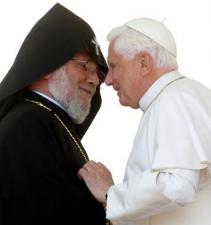
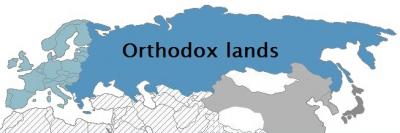
For the next wave of concordats it's essential to court the Orthodox patriarchs who could block the spread of concordats throughout their territory. In Georgia in 2003 the Vatican learned a hard lesson when it tried to conclude a concordat in spite of Orthodox opposition. When Archbishop Tauran flew in to Tbilisi he was met by demonstrations at the airport and more demonstrations outside the papal nunciature. The unrest and complaints from the Orthodox patriarch made the government abruptly cancel the signing ceremony the next day and on the following day the Vatican Secretary for Relations with States went home again with an unsigned concordat. [30]
The Vatican is not eager to repeat this humiliation. Hardly a month goes by without some Vatican overtures to one of the patriarchs of the Orthodox lands: prayers for them, birthday greetings, publication of their writing, visits to the Vatican and constant talk of Christian unity. If they can be won over, the way is free for the next wave of concordats.
The first wave was touched off by the dissolution of the USSR which enabled the Vatican to get concordats with the traditionally Catholic countries of the former Eastern Bloc such as Poland, Slovakia, Hungary and Croatia. However, east of them lie the Orthodox lands. For a second wave to come about, the patriarchs must be won over. Then concordats can be extended throughout the Balkans — the Caucasus — the states of Central Asia — and all the way through Russia. A start has already been made. In 2014 a concordat was concluded with Serbia [31] and one was being negotiated with Belarus.
20. Go under the radar with the Order of Malta.
You add camouflage by making the agreement, not directly with the Holy See (the Vatican), but with its wholly-owned subsidiary, the Sovereign Military Order of Malta.
♦ In Hungary the 2010 international cooperation agreement was not with the Vatican but with the Sovereign Military Order of Malta. This is a religious order of the Catholic Church which is arguably more tightly controlled than others because it is placed directly under the pope.
♦ Many other countries, from Kenya to the Russian Federation, that are concerned about providing more health care, have entered agreements with the Order of Malta. This is a Vatican-controlled body that purports to be a “sovereign entity”, which allows it to cast its “aid agreements” in the form of international treaties. These international agreements, which concern health care in accordance with Catholic doctrine, amount to under-the-radar concordats. For more on this, see The Order of Malta ― the Vatican’s second treaty-making “sovereign entity”.
Notes
* Ryszard M. ZajÄ…c, (member of the Sejm 1993-1997), “Konkordatowi - Nie!” Comment on Article 28. http://www.racjonalista.pl/kk.php/s,1342/q,Konkordatowi..Nie
1. “Religion: Peace & the Papacy”, Time, 16 August 1943. http://www.time.com/time/magazine/article/0,9171,933208-3,00.html
2. Francis Xavier Wernz, SJ, Jus Decretalium I, 166, (Rome, 1905). He was a famed canonist at the Gregorian University in Rome who later (1907-1914) became superior general of the Jesuits and a trusted adviser to Pope Pius X. http://www.catholic.org/encyclopedia/view.php?id=3230
3. Sam Smyth, “State lost high-stakes game with two nuns”, Irish Independent, 22 May 2009. http://www.independent.ie/opinion/analysis/state-lost-highstakes-game-with-two-nuns-1747597.html
4. “Vatican seeking closer ties with Taiwan”, Republic of China press release, 22 December 2011. http://www.catholicculture.org/news/headlines/index.cfm?storyid=12766
5. “Order of Malta ― the Vatican’s second treaty-making ‘sovereign entity’”, Concordat Watch, 2011. http://www.concordatwatch.eu/topic-47398.843
6. Penny Lernoux, “Who knows? The Knights of Malta know”, National Catholic Reporter, 5 May 1989, pp. 9-10. http://www.concordatwatch.eu/kb-37575.843
7. Constantinian Order of St. George. http://www.constantinianorderofstgeorge.org/9.html
8. The Maltese Association: Order of Malta, Newsletter No. 76, October 2010. www.orderofmalta-malta.org/publications/Newsletter%20October2010.pdf
9. Final Act to the Treaty of Accession to the European Union 2003. http://eur-lex.europa.eu/en/treaties/dat/12003T/htm/L2003236EN.095700.htm
10. Protocol No 7 on abortion in Malta (2003). http://eur-lex.europa.eu/en/treaties/dat/12003T/htm/L2003236EN.093100.htm
Nothing in the Treaty on European Union, or in the Treaties establishing the European Communities, or in the Treaties or Acts modifying or supplementing those Treaties, shall affect the application in the territory of Malta of national legislation relating to abortion.
This was based on the Irish Protocol attached to the Maastricht Treaty in February 1992. http://www.forummalta.gov.mt/Portals/FME/Documents/AGGSE21e_Abortion.pdf
11. “Church does not insist on settlement due to recession - Czech PM”, ÄŒTK, ÄŒseké Noviny, 26 September 2009. http://www.ceskenoviny.cz/news/zpravy/church-does-not-insist-on-settlement-due-to-recession-czech-pm/399726
12. Foreign and Commonwealth Office, “Signature”, Glossary of Treaty Terms. http://www.fco.gov.uk/en/about-us/publications-and-documents/treaties/practice-procedures/glossary-treaty-terms
13. “Konkordat in Brandenburg”, IBKA Rundbrief, December 2003. http://www.ibka.org/artikel/rundbriefe03/brandenburg.html
14. “Vatican Rebukes Georgia, Orthodox Church”, AP, 20 September 2003. http://wwrn.org/articles/856/
15. “Orthodoxy and Catholicism Clash in Georgia”, Civil Georgia, 9 September 2003. http://civil.ge/eng/article.php?id=5019 Reposted at: http://www.concordatwatch.eu/topic-49860.834
“Georgia Backs Away From Signing Treaty With The Vatican”, Eurasianet, 26 September 2003. http://www.eurasianet.org/departments/insight/articles/eav092603.shtml
16. Gerd Wartenberg, “Offener Brief an die Mitglieder des Landtags und der Landesregierung Brandenburgs”, 30 October 2003. http://www.ibka.org/artikel/ag03/hvbbkon.html
17. “Tarso defende acordo com Vaticano e diz que projeto prevê manutenção do Estado laico”, Fohla de S. Paulo, 27 September 2009. http://www1.folha.uol.com.br/folha/brasil/ult96u615634.shtml
18. “Vatican refuses to give Israel details of accord signed with Palestinians“, Haaretz, 7 July 2015. http://www.haaretz.com/news/diplomacy-defense/.premium-1.664826
19. Jaime Rossell, “State-Religion relations in Spain and Portugal: a brief outline”, 1999, p. 5. http://www.olir.it/areetematiche/56/documents/Rossell_Istanbul1999.pdf. The author is a law professor at the University of Extramadura.
20. “Co w nowym konkordacie jest szczególnie ważne?” (“What in the new concordat is particularly important?”), Father Adam Boniecki interviewed by Tygodnik Powszechny
Onet.pl wiadomósci, 19 March 2006.
http://wiadomosci.onet.pl/jp2/5169,1704,1319956,text.html
21. Frans Hoppenbrouwers, “Nationalistic Tendencies In The Slovak Roman Catholic Church”. Religion in Eastern Europe, Volume XVIII, Number 6, December 1998, pp. 7-8. The author is a Roman Catholic Church historian and secretary of studies of the Dutch Roman Catholic relief organization, Communicantes. http://www.georgefox.edu/academics/undergrad/departments/soc-swk/ree/Hoppenbrouwers_Nationalistic_Dec%201998.pdf
22. Roland Minnerath, (Professor of Catholic Theology, Marc Bloch University, Strasbourg), “The Experience of the Catholic Church in Structuring its Relationship with States in the XX Century”, ИÑторичеÑкий ВеÑтник (Istoricheskii Vestnik, Herald of History), no. 9-10 (2000). http://www.vob.ru/public/bishop/istor_vest/2000/5-6_9-10/1_16.htm
23. Gesetz zu dem Konkordate mit dem Heiligen Stuhle und den Verträgen mit den Evangelischen Kirchen vom l5. Januar 1925, (GVBl. S. 53). http://www.verfassungen.de/de/by/bayern-kirchenvertraege25.htm
24. Aleksandar Vasovic, "Career soldier Mladic became 'butcher of Bosnia'", Reuters, 26 May 2011. http://www.reuters.com/article/2011/05/26/us-serbia-mladic-idUSTRE74P33820110526
25. "Agreement between Holy See and Serbia", VIS, 27 June 2014. http://visnews-en.blogspot.no/2014/06/agreement-between-holy-see-and-serbia.html
26. "Serbia, Holy See sign agreement", In Serbia, 28 June 2014. http://inserbia.info/today/2014/06/serbia-holy-see-sign-agreement/
27. “Vatican Rebukes Georgia, Orthodox Church”, AP, 20 September 2003. http://wwrn.org/articles/856/
28. “Vatican ready to quit Taiwan for ties with Beijing”, Catholic Culture, 26 October 2005.
http://www.catholicculture.org/news/features/index.cfm?recnum=40387&repos=4&subrepos=1&searchid=819881
29. “Serbia, Holy See sign agreement”, In Serbia, 28 June 2014. http://inserbia.info/today/2014/06/serbia-holy-see-sign-agreement/
30. Felix Corley, “Georgia: Catholics fail to break Orthodox monopoly”, Forum 18 News Service, 25 September 2003. http://www.forum18.org/Archive.php?article_id=144
31. “Agreement between Holy See and Serbia”, VIS, 27 June 2014. http://visnews-en.blogspot.no/2014/06/agreement-between-holy-see-and-serbia.html

