



 Concordat introduces sectarian teaching in schools, and missions into indigenous reserves
The Brazilian education law was clearly intended to foster tolerance of the country's religious diversity — not to bring sectarian teaching into state schools, as prescribed by the concordat. Also anchored in the concordat is the right of the Catholic Church to "independent missions".
The Catholic Church argued that the concordat posed no danger to the secularism of Brazil because it represented nothing new. According to chairman of the National Conference of Brazilian Bishops (CNBB), Geraldo Lyrio Rocha, "The treaty only groups, in a single text, what is already in the Constitution, in jurisprudence and ordinary law". [1]
The Bishop even claimed that the reason there has been "no debate with society" about the concordat was precisely because it's nothing new — not because of the secrecy surrounding it. [2] And Brazil's First Vice-President, agreed, saying that, for instance, there is no cause for concern about the introduction of Catholic catechism into state schools, because religious education was already permitted by the education law. [3]
However, Brazilian Department of Education disputed this. It pointed out that the education law talks about religious education without mentioning any specific faith and that it also forbids the promotion of any particular religion. [4]
And, indeed, the concordat clause on education and Brazil’s education law appear to be actually quite different. The Brazilian Government clearly intended religious education to foster understanding of the country's diverse religious landscape. Although Brazil has the largest number of Catholics in the world, it has many other religions. And not only world religions: there are also Afro-Brazilian ones like Candomblé and the indigenous religions of the Amazon rain forest. As part of its commitment to uphold the religious freedom of the most vulnerable peoples, Brazil signed the UN’s 1992 Declaration on the Rights of Persons Belonging to National or Ethnic, Religious and Linguistic Minorities.
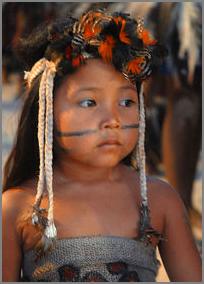
Brazil's present religious education is designed to accommodate this diversity and encourage tolerance. However, the signed concordat implicitly opposes this. Its genuflections in Article 11 to "cultural diversity and religious plurality in the country" and invitations to "other religious denominations" to make their own church-state agreements cannot conceal this fact. Instead of non-sectarian religious education regulated by the educational authorities, Article 11 will permit the introduction into state schools of Catholic catechism under the control of the Church. Furthermore, Article 3 "reaffirms the legal personality of ... missions sui generis", which means independent missions in the indigenous reserves. In 2012 there were 28 bishops of the Salesian order operating in Braziil, almost all of them in mission territories. [4]
 Concordat clause on Religious Education (Article 11)
... The religious education, both Catholic and of other religious denominations, to be optional, is a regular discipline in normal hours of state schools in primary education, so long as the respect for religious diversity of Brazil is ensured, in accordance with the Constitution and other laws, without any form of discrimination.
Excerpts from Brazil's Education Act
The Law of Guidelines and Bases of National Education, (LDB) [5] emphasises in Article 3 that Religious Education is to be taught according to principles which include:
III - pluralism of ideas and pedagogic conceptions;
IV - respecting freedom and valuing tolerance.
And Article 33 states:
Religious education, which is optional, is part of the essential background for a citizen and is a teaching subject included in regular schedules of public elementary schools, with respect being ensured for the cultural diversity in Brazil, and all forms of proselytizing being forbidden.
§ 1. Education systems will regulate procedures to define the contents of religious education and will establish rules to qualify and hire teachers.
§ 2. Education systems will hear social institutions [boards], made up of different religious denominations, to determine [together] the content of religious education.
Notes
See also Prof. Roseli Fischmann's "Escola pública não é lugar de religião" (Public school is no place for religion), Revista Nova Escola, October/November 2009. http://www.metodista.org.br/conteudo-impressao.xhtml?c=9691
* For examples of the UCKG pressing the poor to tithe more than they can afford in order to win God's favour, see three sites:
Universal Church of the Kingdom of God, aka “Stop Suffering” [English excerpts of Belgian report on UCKG and other news] http://www.apologeticsindex.org/i04.html
Religion News Blog: UCKG [news archive in English about the UCKG activities worldwide from August 2002] http://www.religionnewsblog.com/category/uckg
Malcolm Redfellow's Home Service, 3 April 2011. [Blog gives excerpts and gist of Mark Bridge, “Church encourages worshippers into debt”, The Times, 20 November 2011, which Redfellow considers too important to be kept behind a paywall.] http://redfellow.wordpress.com/2011/04/03/cults-need-clipping/
And for an expert analysis of UCKG media strategy see:
Raul Reis, “Media and Religion in Brazil: The rise of TV Record and UCKG and their attempts at globalization”, Brazilian Journalism Research, 2007. http://sbpjor.org.br/ojs/include/getdoc.php?id=260&article=98&mode=pdf
1. "Parlamentares divergem sobre estatuto da Igreja Católica", ("Congressmen disagree on status of Catholic Church"), Agência Câmara, 7 May 2009. http://www2.camara.gov.br/homeagencia/materias.html?pk=134326
2. "Tratado com Vaticano gera críticas e faz Câmara convocar audiência" ("Treaty with Vatican generates criticism and calls for a House hearing"). Estadao, 28 June 2009. http://www.estadao.com.br/estadaodehoje/20090628/not_imp394233,0.php
3. "Comissão de Relações Exteriores debate Acordo Brasil e Santa-Sé" ("Committee on Foreign Relations debates Agreement between Brazil and Holy See"), Agência Câmara, 6 May 2009. http://www2.camara.gov.br/comissoes/credn/comissao-de-relacoes-exteriores-debate-acordo
4. "Salesians Take Up Call to New Evangelization, Focus on Evangelizing the Young", Zenit, 19 July 2012. http://www.zenit.org/article-35226?l=english
5. "Tarso defende acordo com Vaticano e diz que projeto prevê manutenção do Estado laico Publicidade", Fohla Online, 27 September 20. http://www1.folha.uol.com.br/folha/brasil/ult96u615634.shtml
6. At present it consists of the Law 9394 of 20 December 1996, as amended by Law 9475 of 22 July 1997.
http://www.planalto.gov.br/ccivil_03/LEIS/l9394.htm [contains Article 3 with the Aims]
http://www.planalto.gov.br/ccivil_03/LEIS/L9475.htm [contains the revised Article 33]
The translation of Article 33 is of the legislation presently in force. The original wording from the previous year (crossed out in the text), translates as follows:
Article 33. Religious education, which is optional, is a subject included in regular schedules of elementary public education schools and is offered without cost for the Government according to the preferences expressed by the students or their guardians, in two types: I - confessional, according to the religious creed of the student or his guardian, ministered by teachers or religious counselors prepared and accredited by their respective churches or religious organizations; or II - interconfessional, according to an agreement among different religious organisations, which will be in charge of the religious education curricula.

